

Mármore has been employed as a building material and as a decorative piece for millennia. From antiquated temples and sculptures to modern luxurious residences, hotels, and commercial spaces, marble is still a representation of class, stability, and refined taste. Despite the reputation of being a long-lasting natural stone, marble is also considered one of the most misunderstood materials regarding maintenance.
Many controversies that are commonly associated with “poor-quality marbles” are, in reality, caused by carelessness. Etching, staining, dull surfaces, uneven gloss, and premature wear are not to be expected. They are the symptoms of strategies that neglect the true nature of marble as a stone based on calcium.
How should marble be preserved? The answer is not located in a single product for cleaning or a consistent routine. Effective marble care is a systematic method that involves understanding the material’s properties, controlling the risk of environmental pollution, using the correct cleaning methods, and applying protective treatments at the appropriate time.
Marble as a Material: Why Maintenance Matters
Marble is a metamorphic stone primarily composed of calcium carbonate. This composition gives marble its characteristic veining, translucency, and ability to take a high polish. At the same time, it also makes marble chemically sensitive, especially to acids and moisture.
Unlike granite or engineered stone, marble is porous. It absorbs liquids, reacts with acidic substances, and gradually changes under mechanical wear. These characteristics are not flaws; they are intrinsic properties of natural marble stone. Maintenance is therefore not about “fixing” marble, but about working with its nature.
Because marble is softer than many other stones, its surface evolves. A well-maintained marble surface develops a controlled, elegant patina. A poorly maintained one becomes uneven, dull, or damaged. The difference lies entirely in how the stone is treated day after day and year after year.
The Core Principle of Marble Maintenance: Prevention Over Repair
One of the most important principles of professional marble care is that prevention is always more effective and less expensive than restoration. Polishing, grinding, and resurfacing can address damage, but each procedure takes a small amount of stone away from the surface. Over time, too much correction will shorten the life of the stone.
Effective marble care, therefore, involves reducing the likelihood of damage before it occurs. This involves controlling impurities, reducing erosion, and maintaining surface defense.
In practice, this implies that daily care, environmental management, and periodic professional treatment are all part of a single maintenance system rather than being considered as actions that are isolated from one another.
Daily and Routine Marble Cleaning: Doing Less, but Doing It Right
Routine cleaning is the cause of the majority of the damage to marbles, not because of their constant need for attention, but because of how they are often cleaned incorrectly. Many general-purpose cleaners can remove grease, mineral salts, or bacteria aggressively. These statements are often acidic or alkaline, both of which are detrimental to marble.
For daily or frequent cleaning of marble floors and surfaces, the objective is simple: remove loose dirt and impurities without negatively impacting the stone’s surface.
A pH- neutralizer that is specifically designed to clean natural marble is the safest option. These cleaners remove dust and other debris without chemically interacting with calcium carbonate. Warm water alone is effective at cleaning light, but if excess moisture is not deposited on the surface, it will fail.
Mechanical abrasion is another concealed danger. Dust, sand, and grit have the effect of sandpaper beneath foot traffic. Eventually, this microabrasion causes the polished marble to become dull and the wear in high-traffic areas to accelerate. Constant dust cleaning or vacuuming with soft, non-abrasive instruments reduces this effect significantly.
Moisture Control and Drying: Often Overlooked, Always Critical
Marble is not only affected by what is touched on it, but also by the amount of moisture that remains on its surface for a long time. Standing water, even when purposely clean, can still penetrate the stone and cause damage to it through microscopic openings. Eventually, this results in the darkening of the material, the moisture content, or internal structural failure.
After cleaning with water, the marble should always be dried with a soft cloth or allowed to air-dry quickly. In bathrooms, kitchens, and spas, proper ventilation is essential in order to prevent the mármore from being damaged.
Controlling humidity is of paramount importance to marble wall covering and flooring in confined spaces. Exposure to high humidity for a long period of time can lead to efflorescence or internal moisture migration, both of which negatively affect the appearance and structural stability.
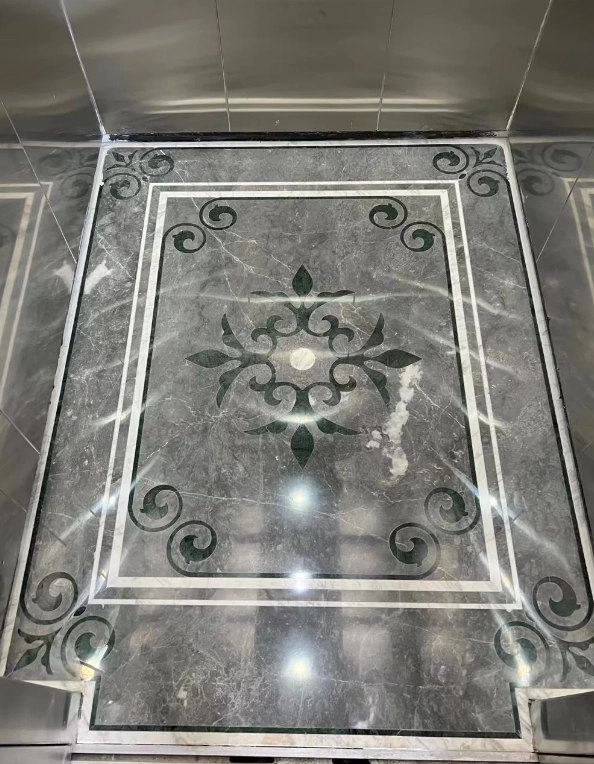
Stains, Etching, and Surface Damage: Understanding the Difference
Marble is not only affected by what is touched on it, but also by the amount of moisture that remains on its surface for a long time. Standing water, even when purposely clean, can still penetrate the stone and cause damage to it through microscopic openings. Eventually, this results in the darkening of the material, the moisture content, or internal structural failure.
After cleaning with water, the marble should always be dried with a soft cloth or allowed to air-dry quickly. In bathrooms, kitchens, and spas, proper ventilation is essential in order to prevent the marble from being damaged.
Controlling humidity is of paramount importance to marble wall covering and flooring in confined spaces. Exposure to high humidity for a long period of time can lead to efflorescence or internal moisture migration, both of which negatively affect the appearance and structural stability.
The Role of Marble Sealing in Long-Term Maintenance
Marble sealing is one of the most misconstrued aspects of marble care. Sealers fail to make marble stain-resistant, nor do they create an impervious barrier. Instead, they decrease the stone’s capacity to absorb water, which gives spills extra time to be scrubbed before they enter.
A competent sealer that penetrates the marble will fill the microscopic pores in the marble without creating a surface layer. This maintains the original appearance of the stone while increasing its resistance to staining.
The efficacy of marble sealing is influenced by several components, including the stone’s density, the type of finish, and the environmental exposure. Polished marble is typically less frequently sealed than marbles that are honed or brushed; however, in kitchens and bathrooms, the need for frequent attention is greater.
Sealing should always be considered as a supplemental procedure, not a substitute for regular cleaning and appropriate use.
Polished, Honed, and Textured Marble: Maintenance Differences
Different marbles have different behaviors during use and should be maintained differently. Polished marble has a smooth surface that reflects light better; however, it is harder to clean and tends to absorb dirt. Marble that is honed has a smooth finish that conceals etches, but it is also more readily absorbed by liquids.
Textured surfaces like marble that are brushed or tumbled increase the difficulty of maintaining them. Their uneven surfaces facilitate the accumulation of dirt more easily and need to be more thoroughly cleaned in order to avoid buildup.
Maintenance is therefore not universally applicable. The correct approach depends on whether the marble is polished marble flooring in a hotel lobby, honed marble countertops in a residential kitchen, or textured marble tiles in a bathroom.
Periodic Professional Maintenance: When and Why It Matters
Even with excellent daily care, marble surfaces benefit from periodic professional maintenance. This does not necessarily mean aggressive restoration. In many cases, light honing or repolishing at controlled intervals helps maintain uniform appearance and prevents localized damage from becoming widespread.
Professional marble maintenance typically involves controlled mechanical processes using progressively finer abrasives. The goal is to refine the surface, not remove excessive material. When performed correctly, this extends the life of the marble rather than shortening it.
The frequency of professional intervention depends on traffic levels, usage patterns, and aesthetic expectations. High-end commercial spaces may require annual attention, while residential marble may only need professional care every few years.
One Key Section Where Structure Matters
To summarize the most important daily marble maintenance principles, the following practices form the foundation of long-term care:
Use only pH-neutral cleaners designed for natural marble stone
Remove dust and grit frequently to reduce surface abrasion
Avoid acidic, alkaline, or abrasive cleaning products
Dry marble surfaces after wet cleaning or spills
Address spills immediately to minimize absorption
These simple actions, when performed consistently, prevent the most common marble problems before they start.
Marble Floors: Special Considerations for High-Traffic Areas
The maintenance of marbles regularly presents unique difficulties because of the constant mechanical abrasion. Foot traffic carries dirt, grit, and pressure that, over time, will change the surface. Entryways, corridors, and staircases are particularly susceptible.
Preventative measures like high-quality entrance covers greatly diminish the number of abrasive particles that enter the space. Mats should be positioned both near the exterior and interior entrances, and they should be cleaned on a regular basis in order to remain effective.
In commercial settings, maintenance programs should be formulated based on the traffic pattern rather than a fixed schedule. Areas that are more frequently used require more frequent attention, while areas that have little traffic can be maintained more sparingly without negatively affecting the overall appearance.
Marble Countertops and Vanity Tops: Functional Elegance
Marble countertops are cherished for their beauty, but they need to be cared for with informed concern. Kitchens and bathrooms regularly encounter marble that is exposed to acids, oils, cosmetics, and moisture. In these habitats, the maintenance of order is equally important to the cleaning of the habitat.
Directly slicing on marble, placing hot cookware on the surface, or leaving spills unattended increases the probability of damage. While marble can withstand heat better than other engineered materials, thermal shock and staining still pose a problem.
Routine marble countertop care involves cleaning with a mild detergent, promptly removing any spillage, and maintaining a functional seal. Eventually, many homeowners tend to embrace light etching as a part of the natural attributes of marble. The secret is making sure this patina is developed in an even manner rather than in an uneven manner.
The Second Structured Section: Common Maintenance Mistakes
Many marble problems arise not from lack of care, but from well-intentioned mistakes. The most common errors include:
Using vinegar, lemon-based, or acidic “natural” cleaners
Applying generic bathroom or limescale cleaners
Scrubbing with abrasive pads or powders
Over-wetting marble surfaces during cleaning
Assuming sealed marble is immune to damage
Avoiding these mistakes is often more important than adopting complex maintenance routines.
Outdoor Marble: Weather, Pollution, and Time
Outdoor marble slabs have problems that interior stone doesn’t have. Rainwater, pollution, temperature changes, and biological growth all affect marble in different ways.
Acid rain and other airborne pollutants interact with marble surfaces over time, causing the surface to erode and lose its details. In these instances, the focus is on maintaining the marble’s originality, controlling the environment as much as possible, and recognizing that outdoor marble will have a visible aging process.
Preventative treatments may slow the process of deterioration, but they cannot eliminate the environmental effects. As a result, outdoor marble conservation is a compromise between protection and honoring the natural aging process.
Restoration vs. Maintenance: Knowing When to Intervene
The most important professional judgment in marble care is recognizing when maintenance is no longer sufficient, and restoration is necessary. Deep scratches, uneven patterns, or structural injuries are unable to be mended alone by cleaning or sealing.
Restoration should be considered with caution. The objective is to regrow function and beauty while maximizing the original material as much as possible. After the restoration, a new strategy for maintaining the building should be devised to avoid repetition.
Final Structured Insight: A Long-Term Marble Maintenance Framework
Viewed holistically, effective marble maintenance rests on three interconnected pillars:
Informed daily care that respects marble’s chemical sensitivity
Preventive measures that reduce exposure to abrasion, moisture, and acids
Periodic professional treatment aligned with usage conditions
When these elements work together, marble remains beautiful, functional, and structurally sound for decades.
How Should Marble Be Maintained?
Marble should be cared for with knowledge, control, and consistency. It doesn’t necessitate harsh chemicals or constant supervision, but it does require recognition of its natural attributes.
Effective marble care not only maintains the stone’s appearance but also preserves its long-term value. Whether located in a private home or a commercial space, well-kept marble has a tale of care, craftsmanship, and long-lasting quality.
When approached correctly, marble doesn’t just survive the passage of time—it enhances it.
 Portuguese
  English
  Spanish
  French
  German
  Italian
  Russian
  Japanese
  Arabic
  Vietnamese
  Indonesian